
A mechanical movement that winds itself as you wear the watch. A rotor (oscillating weight or mass) turns with wrist motion, winding the mainspring and storing energy.
A mechanical movement that must be wound by hand using the crown. Once fully wound, it runs for a set power reserve before needing to be wound again. All of BOVET’s manufacture movements are manual-wind.
A movement powered by a battery and regulated by a vibrating quartz crystal. Quartz watches are very accurate and need little adjustment.
The amount of time a fully wound watch will run before stopping. Some watches show this with a power reserve indicator, like a fuel gauge. Industry standard power reserve is 42-48 hours, while BOVET’s range is 120 – 528 hours (5 – 22 days).
A seconds hand that moves smoothly around the dial, typical of mechanical watches.
A time scale based on Earth’s rotation relative to the stars, resulting in a day slightly shorter than 24 hours.
A display that shows whether a given time is during the day or at night, often with sun and moon symbols.
A modern luminous material applied to hands, indexes, miniature paintings, dials, moon phases, and more, that glows after being exposed to light.
The band, often in leather, rubber, or textile, that secures the watch to the wrist.
A traditional buckle with a pin that passes through holes in the strap.
A scale around the edge of the dial marking the minutes, sometimes resembling (and referred to as) a railway track.
The projections on the case where the strap or bracelet is attached to the watch. The Fleurier case has no lugs, while the Dimier case does.
Markers on the dial that indicate hours and sometimes minutes, either printed or applied as metal batons or numerals.
The “face” of the watch where the hands and indications are displayed.
A folding metal clasp that lets the strap open and close without fully unbuckling, improving comfort and security.
A way of showing the time on a 24‑hour scale instead of 12 hours.
A display that spells out the day of the week, such as Monday or Tuesday.
A display showing the current day of the month, often in a window, on a subdial, or with a pointer hand.
The transparent window on the front or back of the watch, made from synthetic sapphire and highly resistant to scratching.
The small knob used to wind the watch and set the time. On BOVET watches, it sits at 12 o’clock on Fleurier cases and at 3 o’clock on Dimier cases.
The back of the case, either solid or fitted with a sapphire crystal to reveal the movement (an exhibition back). BOVET pioneered the exhibition case back concept in the 1800s.
The outer shell that houses and protects the movement and dial. It comes in shapes like round, cushion, tonneau, rectangular, and oval.
The ring that surrounds and frames the dial, forming the upper part of the case around the sapphire crystal.
A window in the dial that shows information such as the date, power reserve, or a day/night indicator.
A dial coated with layers of lacquer for a smooth surface and intense colour. BOVET dials typically use 8 layers of lacquer, dried between each application, resulting in beautiful depth and richness.
A guilloché pattern forming a grid of small raised squares, often called a “waffle” texture.
Very fine lines radiating from the centre of the dial, catching the light like sunbeams.
A matte texture created by blasting a surface with fine particles.
Overlapping circular patterns applied to movement plates and other surfaces.
A soft, slightly textured finish that gives the dial a gentle, milky sheen.
A thin slice from the inside of oyster shells, used on dials for its iridescent shimmer. BOVET’s miniature painted dial are typically on Mother-of-Pearl, as the paint adheres best to this surface.
Extremely detailed hand‑painting on a dial at a very small scale.
A dial cut from a thin slice of meteorite, each with a unique crystalline pattern. BOVET uses shards from the Gibeon meteorite, found in Namibia. The meteorite itself is 4.5 BILLION years old!
A decorative technique using thin inlays of materials such as wood, stone, or other veneers to form patterns or images.
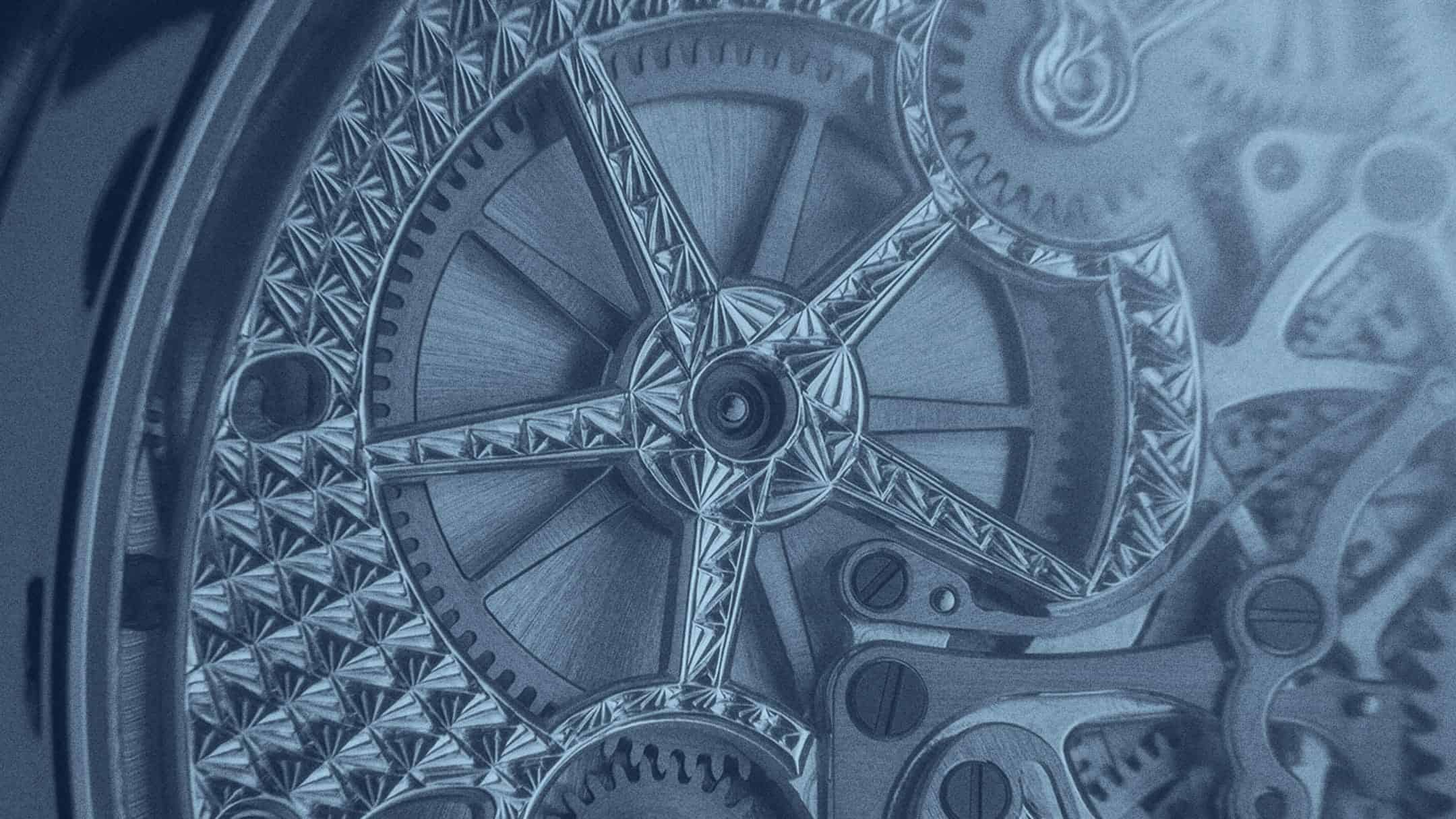
Hand-polished bevels cut along the edges of bridges and plates, usually at 45 degrees. The resulting chamfers and rims are mirror-polished and catch the light beautifully.
A technique of mechanically engraving precise, repeating patterns into metal surfaces like dials.
Hand‑carved designs on precious metal, often used at BOVET for detailed scenes on cases, movements, dials, and more. BOVET has three full-time engravers in its Tramelan manufacture.
A glass‑like material fused to metal at high temperature to create a durable, richly coloured surface.
Traditional arts used to finish dials and movements, including engraving, enamelling, guilloché, miniature painting, and surface treatments.
Curved or straight parallel stripes engraved on movement bridges and plates.
A guilloché pattern that creates a grid of tiny pyramid‑shaped squares on the dial. Clous de Paris means “Paris hobnail” in English.
A surface finish that creates fine, parallel lines on metal, giving a soft, satin look.
“Shattered glass” motif: a unique BOVET engraving that creates a glass-breaking effect, made of hundreds or thousands of tiny hand-carved triangles oriented in different directions.
Hour markers, numerals, or decorative elements cut from metal and applied to the dial instead of being printed.
A digital‑style display where the hour jumps instantly from one number to the next in a window.
A watch that shows the time in many cities or time zones at once, usually with a 24‑hour ring and city names.
A rotating cage carrying the balance and escapement, designed to reduce the effect of gravity on timekeeping.
A hand that travels along a scale and then jumps back to its starting point instead of making a full circle.
A general term for chiming complications that strike the time on demand (minute, quarter, or five‑minute repeaters).
A display that shows how much running time remains, like a fuel gauge for the movement.
A highly advanced calendar that automatically adjusts for different month lengths and leap years for many decades.
A display showing the current phase of the Moon, such as new moon, half moon, or full moon.
A chiming complication that strikes hours, quarters, and minutes on demand when a slider is activated.
A calendar that automatically accounts for 30‑ and 31‑day months and needs correction only once a year, at the end of February.
A feature that stops the seconds hand when the crown is pulled out, allowing precise time setting.
A watch combining several major complications, typically three or more, such as a chronograph, calendar, and chiming mechanism.
A watch that shows a second time zone with an additional hand.
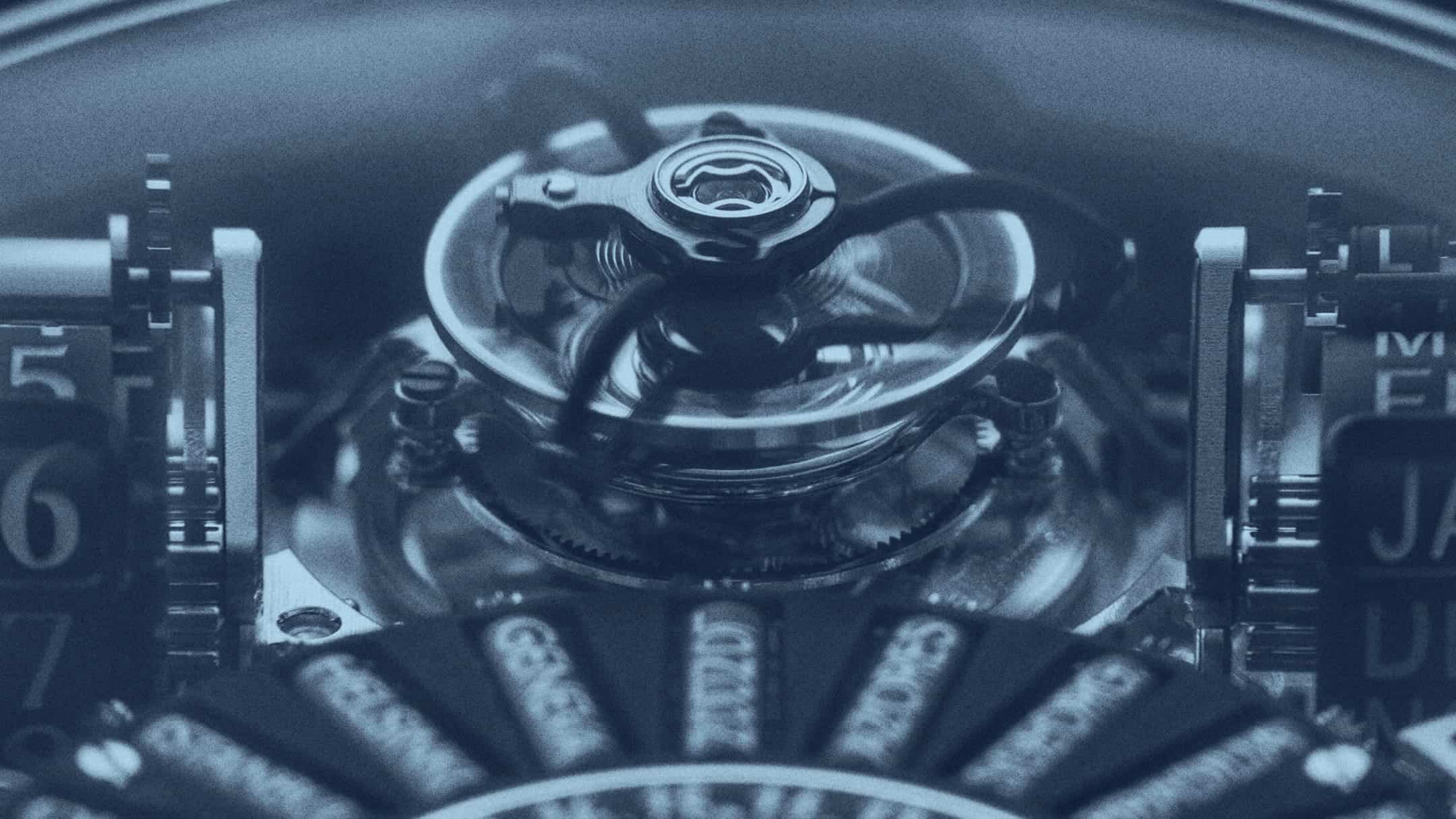
A tourbillon supported in only one place, making it more transparent. Most flying tourbillons are fixed in the back, effectively blocking the view. BOVET’s patented flying tourbillon is fixed in the middle, making it appear to float in the case.
A complication that shows the difference between solar time (based on the Sun) and standard civil time (ranging from -16 minutes to +14 minutes).
A watch with a built‑in stopwatch function controlled by pushers, with subdials for elapsed minutes and sometimes hours.
A display of the night sky, showing stars and constellations as seen from a specific location.
Any complication that shows information such as date, day, month, and sometimes year.