
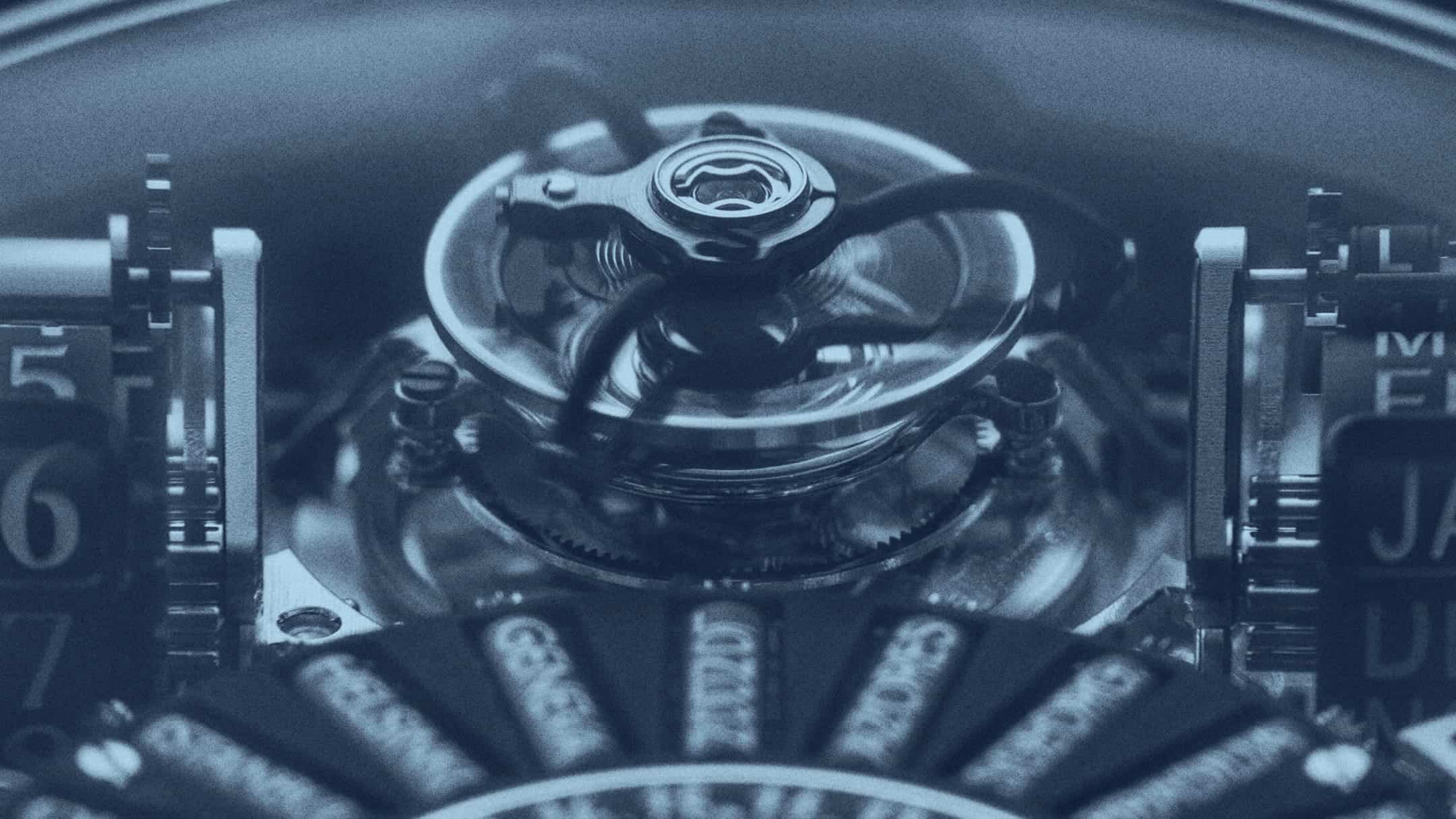

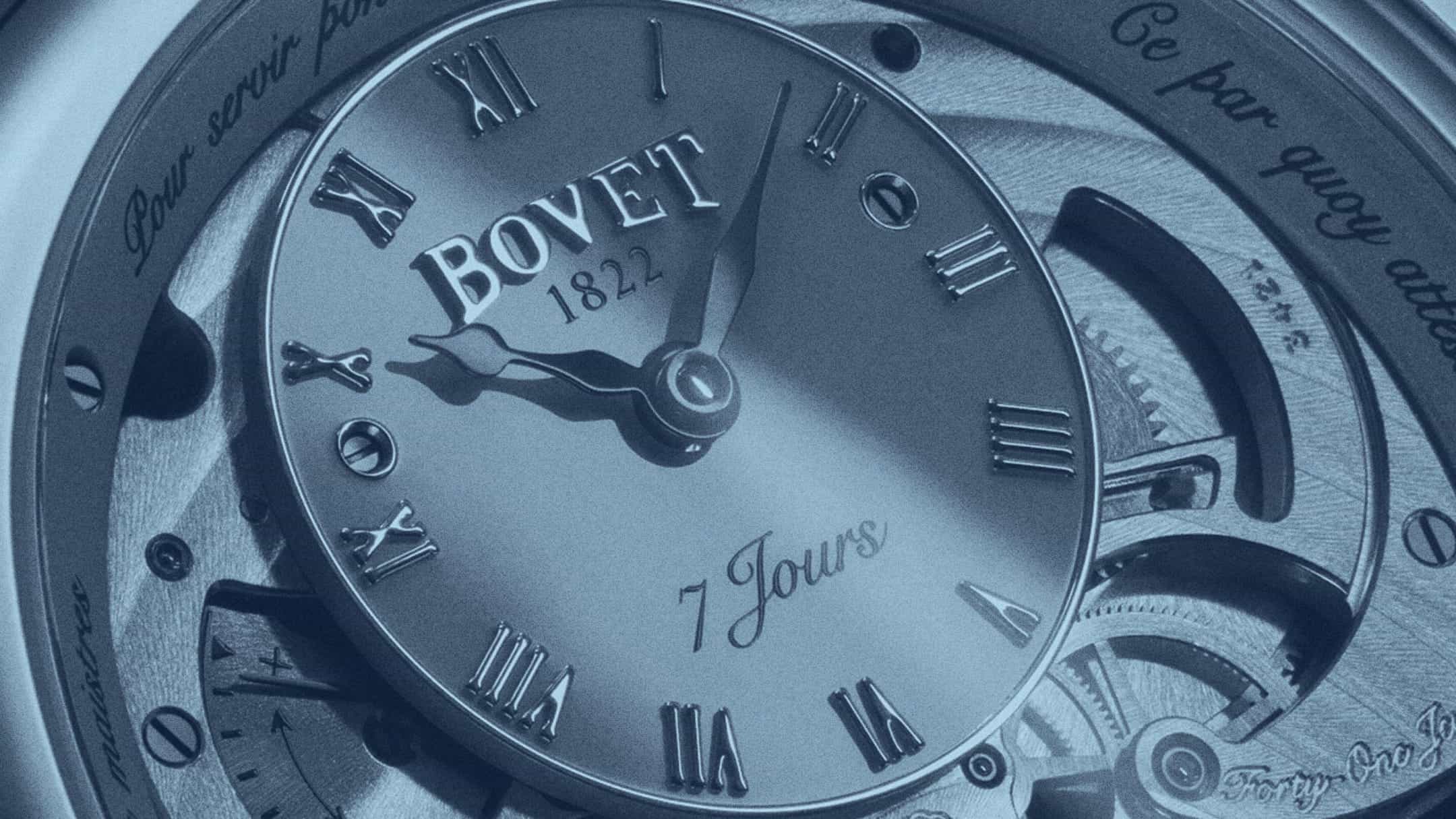
The key innovation behind both the Récital 28 and the Récital 30 is a single radical idea: a mechanical world-time system that finally treats Daylight Saving Time as it exists in the real world, using rollers instead of a traditional fixed city ring.
The Récital 28 Prowess 1 is the first mechanical watch to confront Daylight Saving Time as a problem to be solved, not ignored. Traditional world timers assume a fixed offset between each city and UTC, but in reality, only about a third of countries use DST and the rules change by region and by year, so a large part of the world is always “wrong.” BOVET’s answer is an ingenious roller system that divides time into four timekeeping periods – UTC, American Summer Time, European and American Summer Time, and European Winter Time – and lets the wearer select the correct period via the sapphire cabochon in the crown. When the period is changed, all 24 reference cities on their rollers realign mechanically, so the offsets are accurate for that specific part of the year, everywhere at once.
The Récital 30 takes this breakthrough and distills it into a timepiece devoted entirely to world time, making the system more accessible while preserving its conceptual purity. It inherits the roller-based display from the Récital 28 – 24 city names printed on four-sided rollers plus a dedicated period roller showing UTC, AST, EAS, and EWT – and adds a pusher that instantly rotates all rollers 90 degrees to move between the four time periods. Where the Prowess 1 marries this with a flying tourbillon and roller-based perpetual calendar, the Récital 30 focuses the innovation on clear, practical world time: 24 (25 with New Delhi) time zones displayed correctly across the four periods of the year, allowing travelers to see the true local time at a glance, even as DST rules shift in Europe and the USA.
BOVET’s patented double-face flying tourbillon re-engineers the traditional tourbillon cage to improve both chronometry and aesthetics. Instead of being fixed at the back like other flying tourbillons, BOVET’s cage is fixed at its center, optimizing the distribution of mass between the balance wheel, escapement, and carriage. This reduces the lever-arm effect, allows a significantly thinner cage, and results in a more stable, efficient regulator with better use of space inside highly complicated movements.
This architecture is also designed to be admired from both sides of the watch, hence “double-face.” With greater transparency and less visual obstruction, the tourbillon appears to float in the case, enhancing the impression of depth and lightness. Combined with the Amadeo® convertible system and the option to use the timepiece vertically as a table clock or pocket watch, the tourbillon performs in the positions where it is historically most relevant, reinforcing both its technical purpose and its legitimacy within BOVET’s universe.
Hand-engraving at BOVET is both a signature aesthetic and a declaration of independence from industrial shortcuts. Each bridge, plate, and case is engraved under magnification with traditional tools, cutting directly into the precious metal rather than relying on stamping or laser etching, so every watch carries its own subtle variations in depth, light, and rhythm. Motifs range from classic scrolls and Fleurisanne patterns to fully bespoke scenes requested by collectors, making engraving a true canvas for personalization, across techniques such as Intaglio, Bas-Relief, Positive Engraving, Bris de Verre (shattered glass), chiseling, and more.
Because many of the engraved surfaces are functional components, the engraver must balance beauty with mechanical integrity: removing too much material or cutting too deep can compromise rigidity or disrupt tolerances, so every stroke is carefully planned. The work does not stop at bridges and cases; even clasps, crowns, and buckles can be hand-engraved to create a coherent whole. This level of engraving demands not only artistic mastery but also a watchmaker’s understanding of how components interact once assembled, and it is one of the reasons BOVET can offer such a high proportion of truly bespoke timepieces.
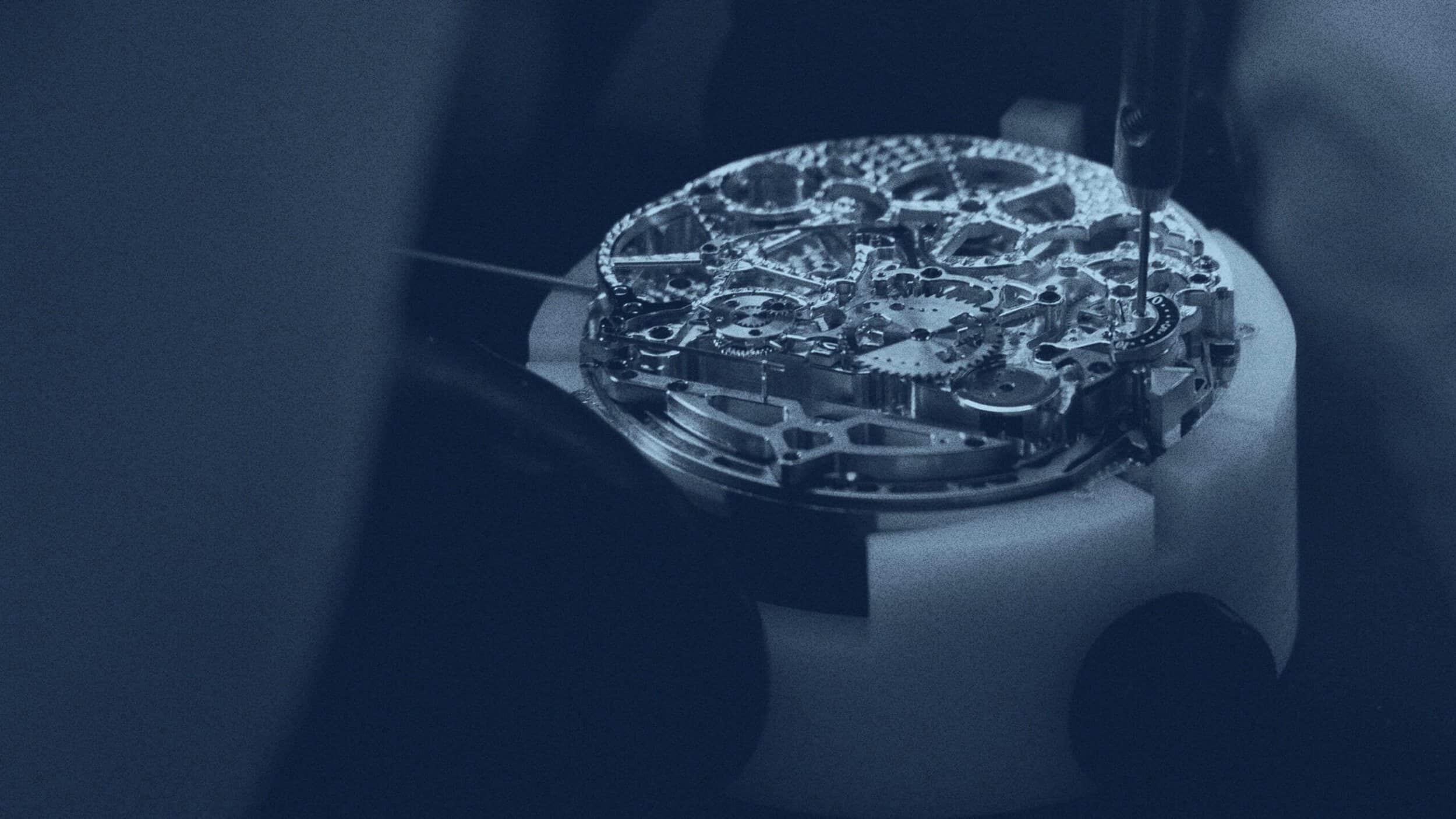
Hand-finishing is where BOVET turns precision components into genuine works of art. Every surface that can be seen – and many that cannot – is finished by hand: bevels are cut and polished into bright, mirror-like chamfers; flat surfaces receive perlage or straight graining; and bridges are dressed with circular Côtes de Genève that catch and reflect the light. These finishes are not merely decorative: polished bevels remove microscopic burrs, grained surfaces help retain lubricants, and properly finished screw heads and slots reduce the risk of damage during servicing.
Nothing leaves the BOVET manufacture without a human eye and hand perfecting it. A single movement can require many hours of finishing work before assembly even begins, and even in more “simple” references, the same standards apply, making every BOVET movement instantly recognizable for its level of hand-finished detail.
Producing hairsprings in-house is one of the rarest and most demanding capabilities in watchmaking, and BOVET is one of only a handful of maisons worldwide that do it. The hairspring — spiral — is the heart of the regulating organ, working together with the balance wheel to define the watch’s beat. Making it internally means controlling the entire process: selecting the alloy, drawing the wire to microscopic tolerances, coiling it into a precise spiral, and heat-treating it so that it retains its elasticity and geometry over time, with each step influencing the movement’s final precision and stability.
Once the spiral is made, it must be carefully matched to the balance and adjusted for concentricity, isochronism, and performance in different positions. Because this work happens inside the manufacture, BOVET can design balance-spring systems specifically for each caliber and complication, rather than adapting to an external supplier’s standard, and can experiment with different geometries, terminal curves, and frequencies. The result is not only superior chronometric performance, but a deeper independence – BOVET quite literally makes its own “heartbeat,” a powerful statement in modern haute horlogerie.
The patented spherical winding system rethinks the traditional crown and winding train to improve both efficiency and durability. Instead of relying solely on flat gears and linear force transmission, BOVET’s system uses a compact, three-dimensional arrangement that reduces friction losses and optimizes how energy from the crown reaches the mainspring. This is particularly important in movements with very long power reserves, for which BOVET is renowned, where consistent, smooth winding is essential for comfort.
For the wearer, the advantage is immediately tangible: winding feels smoother, more precise, and requires fewer turns to fully charge the barrel. Because the system is more efficient, components experience less stress over time, supporting BOVET’s aim of creating timepieces that are not only beautiful but mechanically robust across generations. It is a discreet innovation, largely invisible to the eye, yet fundamental to the everyday experience of owning a BOVET.
The quick date adjust is designed to make everyday use easier while protecting the movement from misuse. Instead of forcing the wearer to spin the hands repeatedly through 24-hour cycles to change the date, BOVET’s patented mechanism allows the date to be advanced rapidly via the sapphire cabochon in the crown, saving time and avoiding unnecessary wear on the gear train.
Crucially, the system is engineered to minimize the risk of damage around the “danger zone,” when traditional calendars can be harmed by setting at the wrong time, because it works in harmony with the calendar’s changeover sequence. It is a practical illustration of how BOVET balances high complication with real-world usability, giving the owner more freedom and confidence when setting the watch.
Perpetual calendars normally require careful, incremental correction if they stop, forcing the owner to cycle through months and years. BOVET’s solution in the Récital 22 Grand Récital allows faster, safer adjustment of all of the calendar indications, dramatically simplifying the process: a dedicated quick-adjust pusher advances all of the indications together, so a watch that has stopped can be brought back in sync in just a few presses.
This system is designed so that collectors are more likely to wear and enjoy their perpetual calendars, rather than leaving them on a winder out of fear of resetting them. By making the calendar easier to operate and less intimidating, BOVET preserves the poetic magic of a mechanism that “remembers” the calendar for more than a century while keeping it genuinely usable in daily life.
BOVET’s patented double co‑axial seconds mechanism allows the seconds to be displayed on both sides of the movement while sharing the same central axis. In a conventional construction, if you simply mount a seconds hand on each side of the same pinion, one side will run clockwise and the other counter‑clockwise; BOVET solves this with a special reversing gear system that keeps the hands coaxial but corrects the direction, so the seconds hand turns the “right” way on each face.
This mechanism is especially useful in BOVET’s double‑sided watches such as the Fleurier Virtuoso VII, Amadéo AmadéoTourbillon, and others, where hours and minutes are already displayed on both sides. It means the wearer can consult the running seconds regardless of which face is showing, without any visual compromise or “backwards” hand. Combined with the Amadéo® convertible case, the double co‑axial seconds becomes more than a technical curiosity: it reinforces the idea that both sides of the watch are fully legitimate primary dials, each with a complete and correctly oriented time display.
Reverse hand fitting is a patented BOVET solution that allows hands to be mounted from the opposite side of the movement compared to traditional construction. By redesigning the way the hands are secured, BOVET can display hours, minutes, and other indications on both sides of a single caliber, without resorting to two separate stacked movements.
This approach opens up significant creative freedom for dial layout and case architecture. It supports the Maison’s signature double-sided displays, where one face may emphasize time and power reserve while the other highlights a complication or an artistic scene. Reverse hand fitting is the technical enabler of that duality, making complex presentations possible while keeping the movement relatively slim and comfortable on the wrist.
The Amadéo® system is one of BOVET’s most emblematic patents, allowing many timepieces to convert effortlessly between wristwatch, pocket watch, and table clock without tools. Inspired by 19th-century BOVET pocket watches and the historical Easel Chronometer, each Amadéo system watch is effectively four timepieces in one, and allows the user to transform it in just a few simple steps, all without any tools.
For collectors, this means a single timepiece can adapt to different moments and ways of wearing: on the wrist on either side during the day, as a pocket watch or pendant for formal occasions, and as a table clock on a desk or bedside table. The system is engineered to be secure and intuitive, with each transformation fast and tool-free. It is a modern reinterpretation of BOVET’s history, turning a practical, functional idea into a signature of the Maison’s identity.