
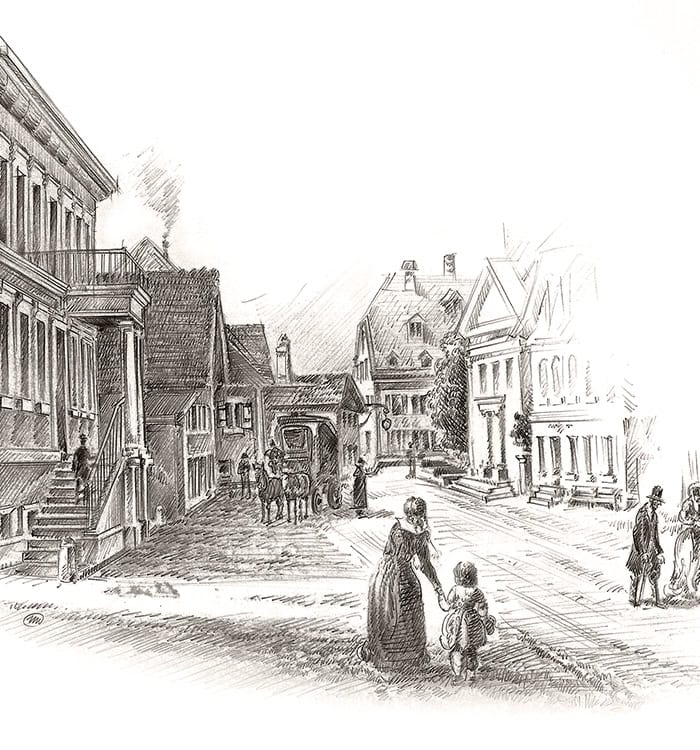
The story of BOVET begins in the Swiss Jura Mountains, in the village of Fleurier. In the late 18th century, Jean-Frédéric Bovet worked as a watchmaker there, passing his craft to his sons – Edouard, Frédéric, Alphonse, and Gustave – all of whom would become watchmakers themselves. This family of artisans grew up in a small valley that would, over the course of a century, transform into one of the great centers of Swiss horology.
In 1814, three of the brothers – Edouard, Alphonse, and Frédéric – left Fleurier for London. At the time, London was the heart of the global watch trade, the place where European craftsmanship met the commercial networks of the world. There, the brothers worked for Magniac & Co., a major trading company, and learned not only watchmaking but also the dynamics of international commerce.
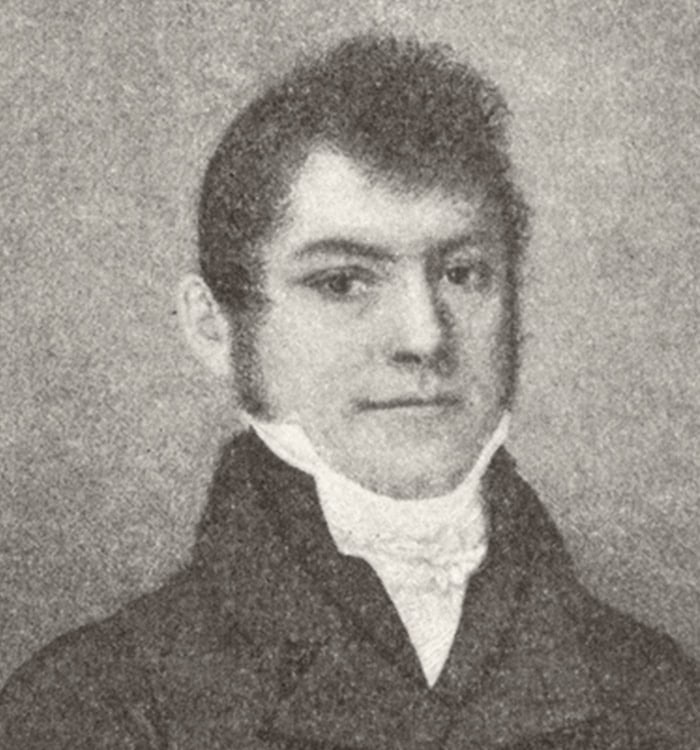
In 1818, Magniac & Co. sent Edouard on a mission that would change his life and the destiny of the family. He left Deal, on the English coast, on April 21, bound for Guangzhou (Canton) in southern China, then the only Chinese port open to Western traders. The voyage on the tall ship The Orville took four months; he arrived on August 16, 1818, carrying just four pocket watches.
Those four watches sold almost immediately for the equivalent of about one million Swiss francs in today’s money, a sign of the extraordinary appetite in China for the finest European timepieces. Trade from the West was concentrated in the “Thirteen Factories” district on the Pearl River, and it was here that Edouard began to see the full potential of the Chinese imperial market.
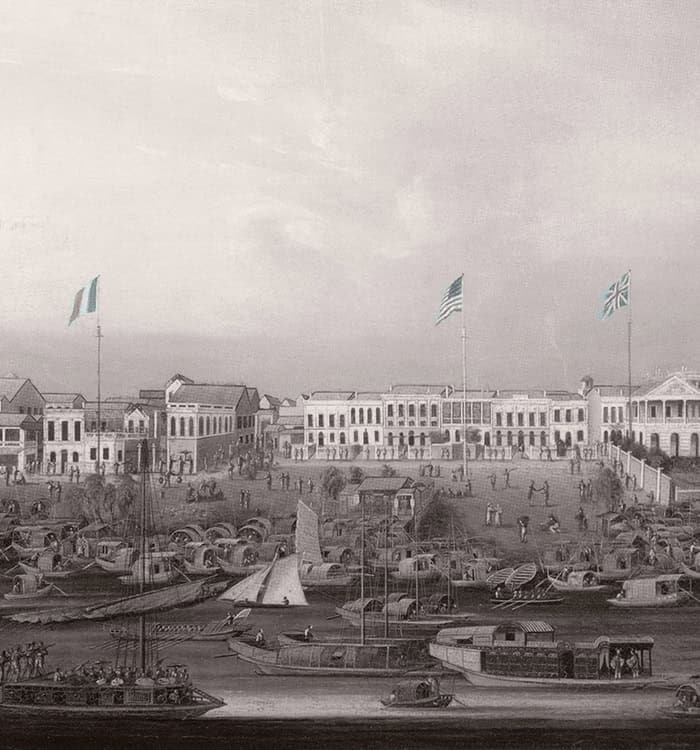
Recognizing this exceptional opportunity, Edouard and his brothers founded the Maison BOVET in 1822. The company was officially registered in London on May 1 of that year, with a structure that reflected its global vision: production and transit in London, main production in Fleurier, and sales in Guangzhou.
Back in Switzerland, BOVET was helping transform Fleurier. At the start of the 19th century, fewer than 200 people in the valley worked in watchmaking; a hundred years later, that number exceeded 2,000. BOVET alone employed more than 175 artisans in and around Fleurier during the 1800s, contributing significantly to the region’s rise as a center of fine watchmaking.
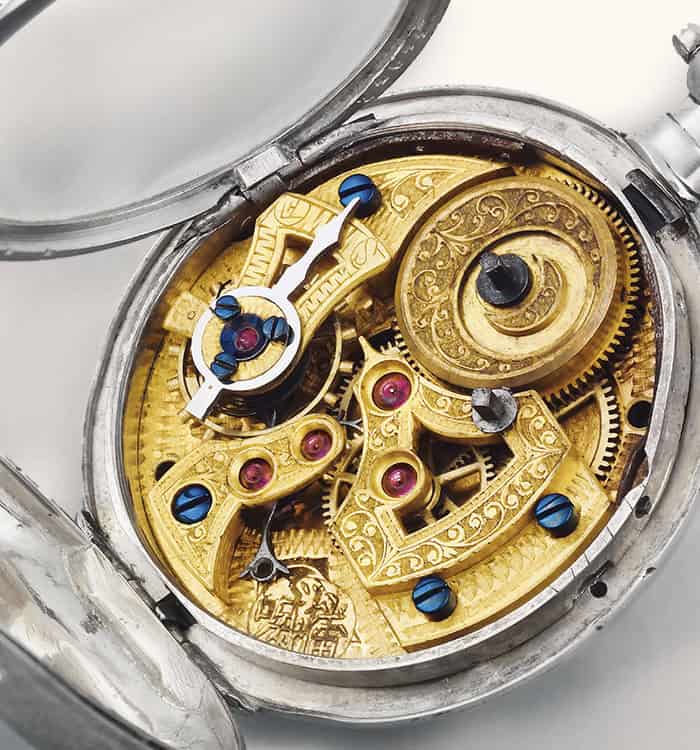
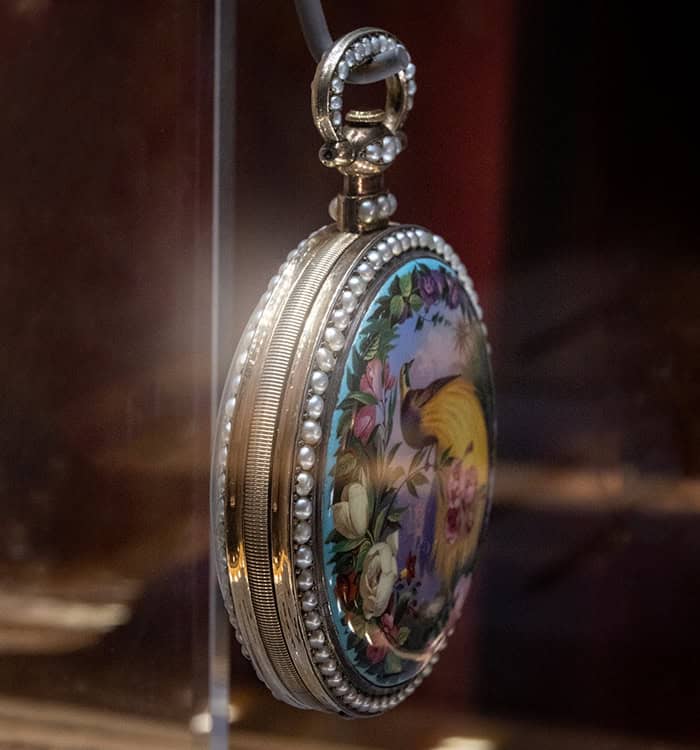
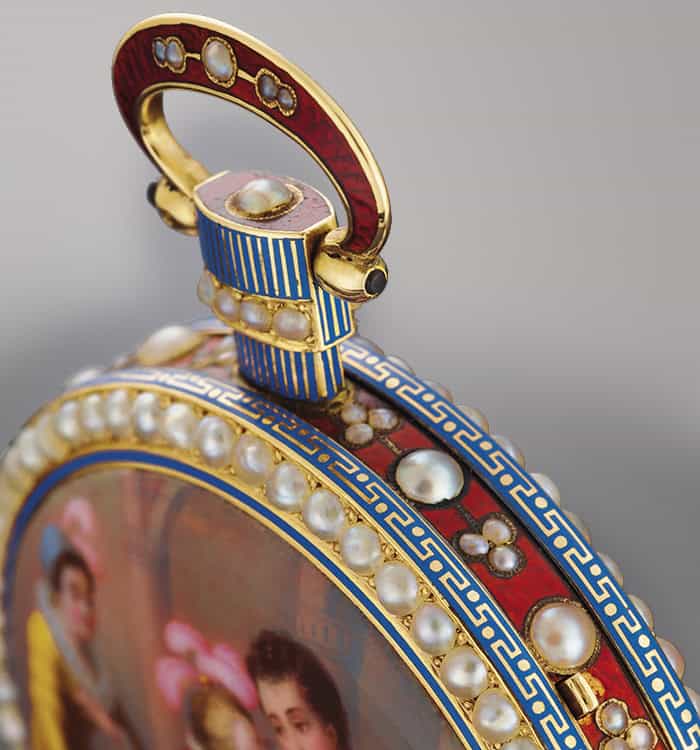
From the outset, BOVET specialized in timepieces for the Chinese imperial and aristocratic clientele. These watches were richly decorated, inside and out: cases set with pearls, enamel miniature paintings, cloisonné and flinqué enamel, and fine engraving. The movements were equally refined, with high-level finishing on bridges and plates.
BOVET was also one of the first companies to sell watches in pairs in China—a format that appealed to local tastes and customs. Most importantly, BOVET introduced one of the great innovations of watch presentation: the exhibition back. This transparent case back allowed owners to admire and display the decorated movement while protecting it from dust and moisture, and it is now a standard of high watchmaking around the world.
The esteem for BOVET in China was such that the Chinese transliteration “Bowei” became a common word for a fine watch in everyday language, a testament to the Maison’s prestige.
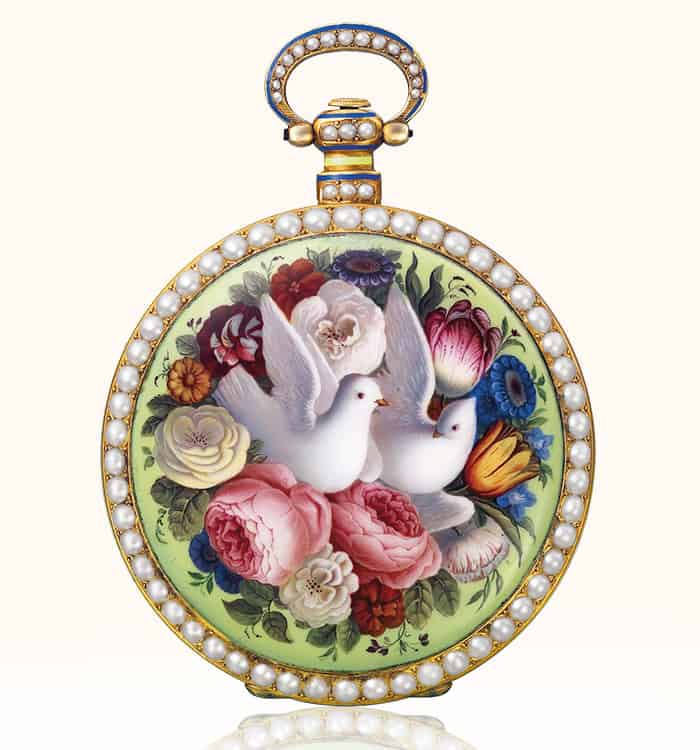
BOVET’s creations were collected by emperors, nobles, and connoisseurs, and many of its 19th-century pocket watches are considered masterpieces. Themes included botanical motifs, portraits, landscapes, mythological and religious scenes, and the Chinese zodiac, with pieces like Mille Fleurs, Portrait of a Chinese Lady, Lake Léman Landscape, Romeo and Juliet, Butterfly, Madonna della Sedia, Polychrome Flowers, and Chinese Zodiac among the most celebrated.
In 1855, at the Universal Exhibition in Paris, BOVET was awarded the Gold Medal in the “luxury” category for a pair of exquisitely enameled pocket watches commissioned by the Xianfeng Emperor of China. This honor recognized the Maison’s ability to blend traditional Swiss watchmaking with artistic mastery and the cultural influences of the Chinese market.
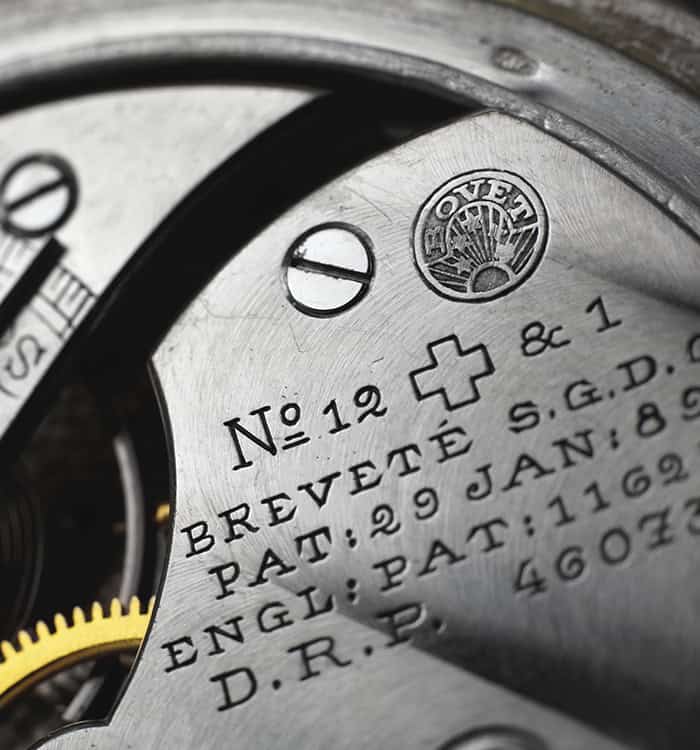
Innovation has always been part of BOVET’s DNA. In 1889, the Maison developed a flyback chronograph whose two subdials could be set as a second time zone, anticipating the needs of global travelers.
In the 1930s, BOVET patented the Easel Chronometer (Swiss patent 148535), a timepiece with a small foot that folded out from the back, allowing it to stand upright as a table clock. This design later inspired the modern Amadeo system, which transform wristwatches into pocket or table clocks without tools, and the dial layout of this timepiece inspired the 19Thirty collection.
In the 1940s, BOVET created a special mono-pusher chronograph, engineered to use fewer components and be easier to assemble and service. This construction is still taught in Swiss watchmaking schools today, underscoring its importance as a benchmark in chronograph design.
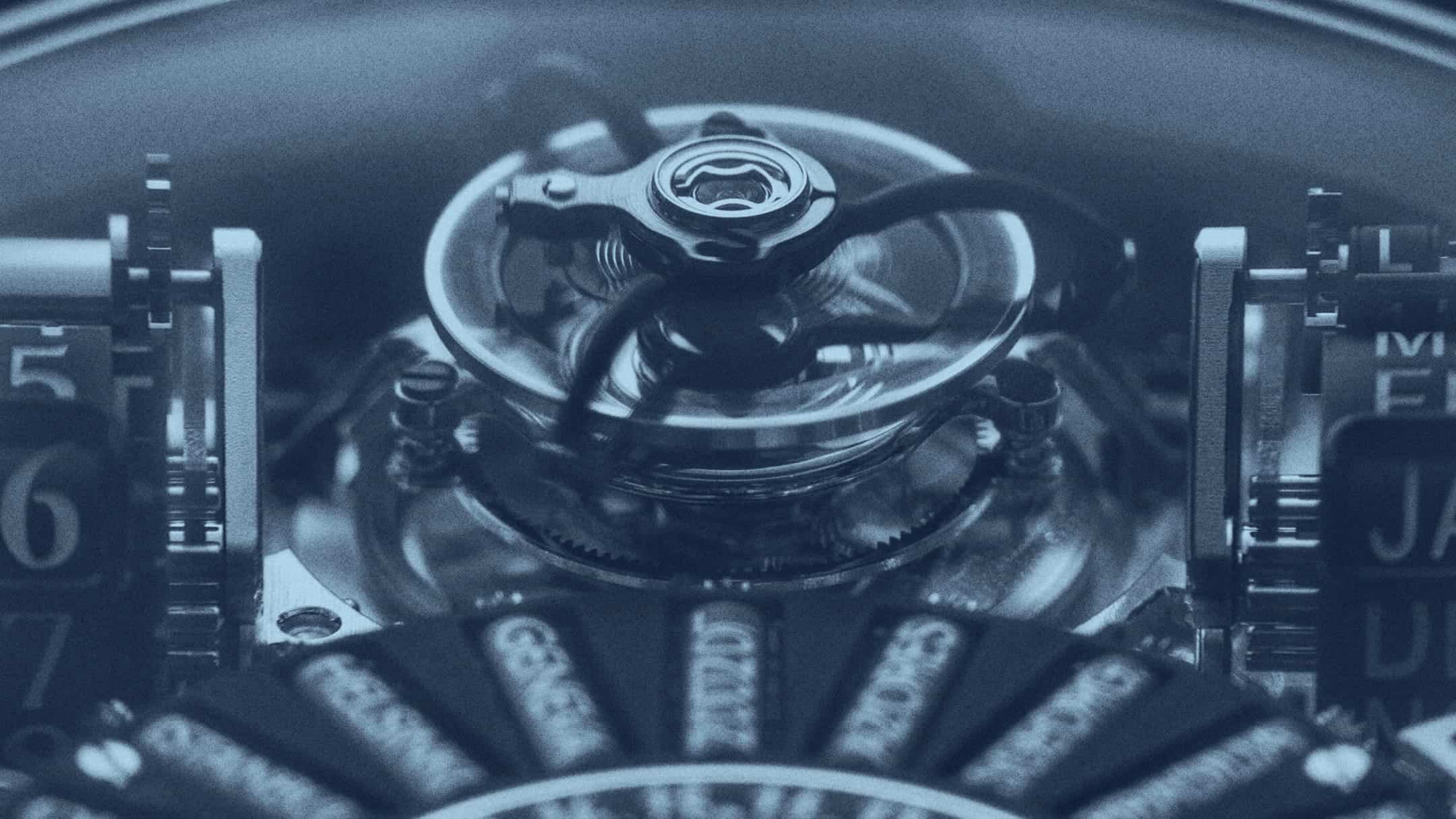
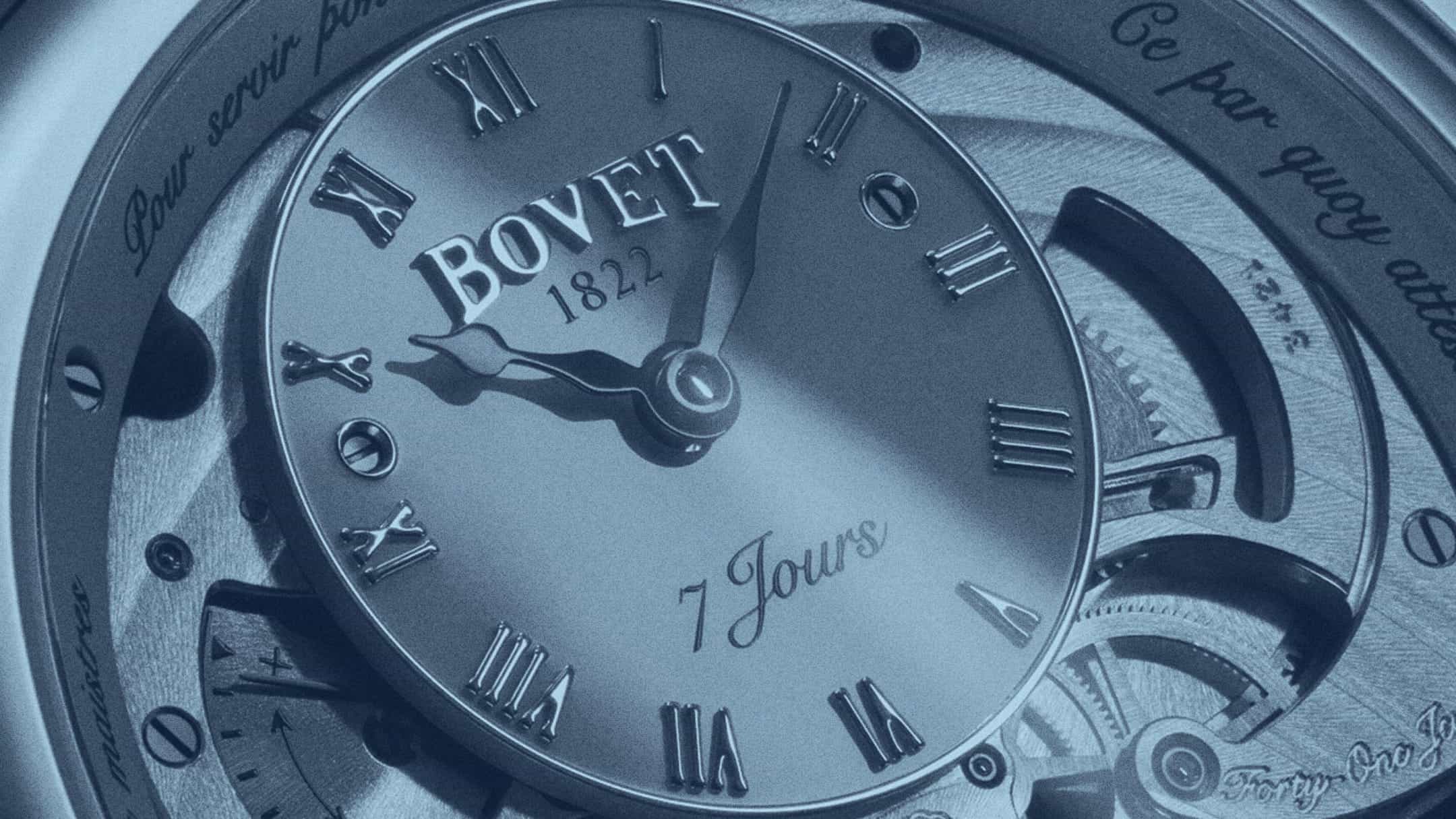
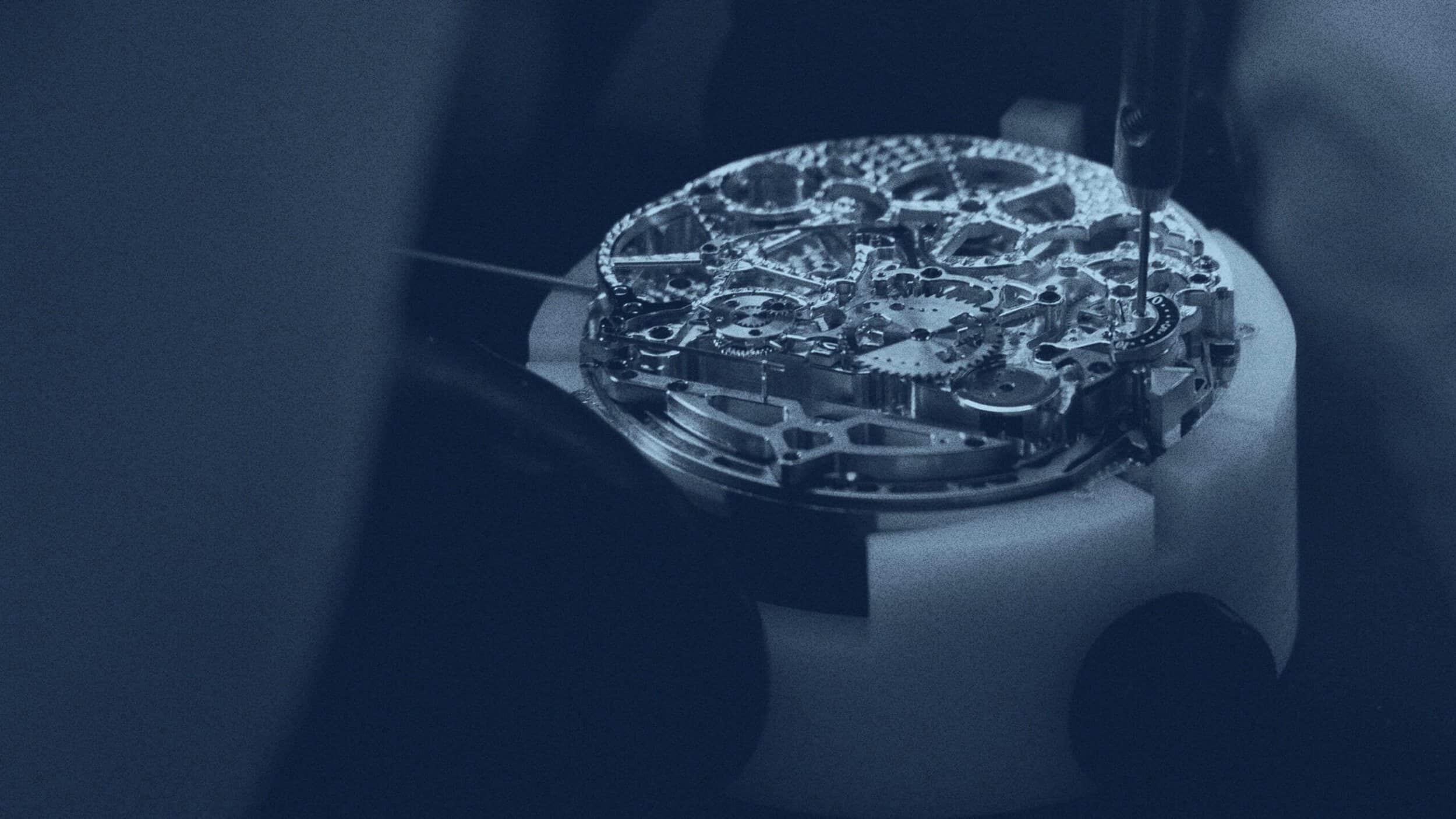
Today, BOVET continues to honor its heritage by uniting three pillars in every creation: artistic elements, handcrafting, and innovation. Its timepieces are represented in major museums around the world, including institutions such as the Forbidden City Museum in Beijing, the National Palace Museum in Taipei, Taiwan, the British Museum in London, and the Musée International de l’Horlogerie in La Chaux-de-Fonds.
The largest single exhibition of BOVET timepieces is found in the BOVET Castle at Château de Môtiers, where more than 60 vintage and modern pieces – including many from Mr. Raffy’s personal collection – are displayed. There, in the valley where the Bovet family once lived and worked, the Maison’s past, present, and future come together, telling the ongoing story of a house that has been shaping fine watchmaking since 1822.